



Antiprostatic medications can be found at any pharmacy.In fact, there are many such medications and each one has a certain effect on patients, which is why a specific choice regarding medications must be made by the urologist individually for each patient.Drug treatment of prostatitis usually requires an integrated approach and involves prescribing medications of different forms and pharmacological groups.
Principles of treatment of the inflammatory process
Prostatitis is an inflammatory pathology that affects prostate tissue.The disease is quite common and occurs mainly in men aged 30 or over, especially those who abuse unhealthy habits and poor diet.Often men try not to notice the symptoms of prostate inflammation.It turns out that the stronger sex does not want to announce the development of such an intimate disease to the end.And only problems with erection and potency in general make you consult a urologist to cure prostatitis.
Therapy for prostatitis in men is aimed at eliminating the inflammatory process and pelvic stagnation of blood circulation.If prostate inflammation is of bacterial origin, antibiotic therapy is indicated.To increase local and general immunity, doctors prescribe immunomodulatory and immunostimulating drugs to patients with prostatitis.Each of the medications has its own dosage regimen, which must be followed exactly, otherwise the treatment will not give the desired result.
What happens if prostatitis is not treated?
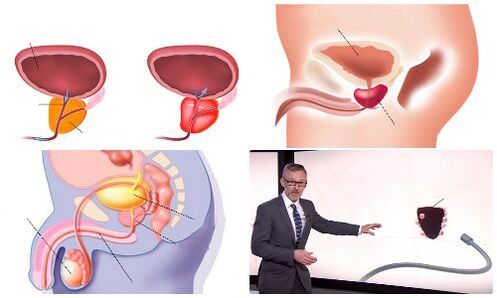
If the inflammatory lesion of the prostate is not treated, the pathology will lead to the development of serious complications.Non-infectious prostatitis is often complicated by sexual disorders such as painful sensations during orgasm, erectile dysfunction, dull orgasmic sensations, premature ejaculation or testosterone deficiency and lack of libido.Furthermore, a non-infectious inflammatory process without adequate therapy causes urinary or reproductive disorders, nervous system disorders and prostate hardening.
If the disease is of infectious origin, in the absence of timely treatment, it provokes the development of cystitis or vesiculitis, pyelonephritis or benign prostatic hyperplasia, glandular abscess or sepsis in patients.Therefore, it is necessary to take this disease as seriously as possible, otherwise it will have many negative consequences, which will not be easy to cure.
Pharmaceutical forms used
When suspicious or even alarming symptoms appear, it is necessary to immediately make an appointment with a specialist, otherwise the pathology can quickly become chronic and it will be much more difficult to get rid of it.After contacting the urologist, the patient is necessarily sent for diagnosis, after which the doctor determines the final diagnosis and prescribes drug treatment for prostatitis.Typically, therapy uses medications in different therapeutic forms.
- Suppositories.Quite effective medicines for the treatment of prostatitis, most often with anti-inflammatory, analgesic and antibacterial activity.They must be inserted into the rectal passage, lying on their side.After inserting the suppository, the man needs to lie in this position for about half an hour so that the suppository dissolves and is absorbed by the mucous membranes.The duration of this therapy is about 1-1.5 weeks.
- Microclysters.Quite effective medicines for the treatment of prostatitis, usually based on herbal decoctions.These medications generally have an anti-inflammatory effect, but are not considered by all experts to be a complete therapeutic technique.Some urologists consider these prostatitis remedies to be unconventional and suitable only for the prevention of pathology.
- Instillations.Such medicinal measures are used only in hospital settings.Special medications for prostatitis are administered transurethral through a catheter, which can only be done in a hospital and only by an experienced and appropriately qualified healthcare professional.
- Injection solutions.They belong to the category of quite effective drugs for the treatment of prostatitis in men.When an injection is administered, the active substances penetrate the desired structures almost instantly.Injections are normally administered intramuscularly, although the possibility of administering some solutions intravenously is not excluded.
- Tablets and capsules are considered the most common form of medication prescribed for prostate inflammation.Tablets for prostatitis in men, as well as capsules, should be taken orally with plenty of liquid.

All of these pharmaceutical forms can be used in patients with inflammatory lesions of the main male gland.Sometimes, to enhance the therapeutic effect, several forms are prescribed simultaneously.
Which medications are relevant for antiprostatic therapy?
An inflamed prostate causes a lot of anxiety in patients, as the pathology is accompanied by extremely unpleasant symptoms.And in the absence of adequate treatment of prostatitis in men with medications, dangerous consequences develop, such as impotence and reproductive failure, cancerous pathologies or a large-scale spread of inflammation throughout the genitourinary system.
Medicines for prostatitis in men are selected depending on the etiology of the inflammatory process.Typically, the list of prostate medications includes drugs from the group of analgesics and antibiotics, α-blockers, muscle relaxants or immunomodulators, etc.Each of these groups has its own spectrum of effects, but you cannot start taking them on your own, only on the recommendation of a urologist.
Antibiotics
How to treat prostatitis in men that develops against the background of a bacterial infection?Of course, antibiotics, the action of which is associated with the elimination of pathogenic microorganisms that provoked the occurrence of the pathological process.These are the first medications prescribed for the prostatic bacterial form.Antibiotic therapy is generally started with drugs from the penicillin, tetracycline or fluoroquinolone group.
Alpha blockers
How to treat prostatitis in men with medication?Quite effective medications include α-blockers, the activity of which is aimed at relaxing the smooth muscle structures of the prostate and facilitating urinary flow.
These medications suppress the activity of the sympathetic nervous system, which is a factor in uncontrollable muscle spasms.Furthermore, this suppression has a specific nature, which consists of suppressing the effect of the nervous system only on glandular tissues.A good drug with a similar mechanism of action is tamsulosin.
Nonsteroidal anti-inflammatory drugs
Since prostatitis is still an inflammatory pathology, it is treated with anti-inflammatory tablets or injections.
- Medications in the NSAID category help patients manage perineal pain;they relieve pain and inflammation, which has a positive effect on overall well-being.
- If prostate inflammation is acute and accompanied by hyperthermia, NSAIDs will help to cope with the temperature.
- Anti-inflammatory drugs for prostatitis have many contraindications, so the prescription should be entrusted exclusively to a specialist.
- Often, the use of NSAIDs leads to disorders of digestive functions, which is why they are prescribed in short courses and with a long break between them.
But which medicine does not have contraindications and adverse reactions;all pharmaceutical products have similar conditions.The main thing is to follow the doctor's instructions, as this way there will be no unpleasant side effects.

Painkillers
Medicines from the analgesic group are indicated for men in cases of acute pathology to eliminate severe pain syndrome.If you treat with painkillers without using other medications, the body will quickly get used to it, which will subsequently lead to an increase in dosage.
For first aid, the simplest types of single-dose analgesic medications help calm the prostate.For long-term therapy, drugs are selected by a specialist, who also determines the duration of the course and dosage regimen.
Blood flow normalizing agents
Often, the cause of the pathology is local disturbances in the blood supply, causing stagnation and impairing tissue regeneration.What are the signs of prostatitis in men, how to treat them, what medications - all this is decided by the urologist.To stabilize the blood supply to the vascular channels, various medications are used to correct blood flow disorders.
These drugs normalize metabolic processes in the prostate gland, increasing blood flow to the glandular tissues.This effect increases the effectiveness of other pharmaceutical products.

Muscle relaxants
Medicines from the muscle relaxant group have a similar principle of action to alpha-blockers, but they act only in the perineal region.With hypertonicity of the perineal muscle tissue, pressure begins to increase on the pelvic structures, which causes the constant presence of pain.The use of tablets from the muscle relaxant category for prostatitis allows you to relieve uncomfortable and painful symptoms, as well as help relax spasmodic muscle tissue.
Immunomodulatory drugs
Antiprostatic therapy cannot do without immunomodulators.These pharmaceutical products are based on natural substances in the form of bovine prostate tissues or extracts.These pharmaceuticals generally have similar effects:
- Reducing the inflammatory process;
- Improve prostate blood or lymphatic circulation;
- Decrease in glandular volume with development of hyperplastic changes in tissues;
- Typically, any prostatitis medicine from this group has the ability to reduce the likelihood of blood clots;
- These medications increase the tone of the bladder walls, normalizing urination processes.
The use of immunomodulators is indicated for adenoma and chronic inflammation of glandular tissues.In addition, products based on bovine prostate are the most effective medicines for the treatment of acute non-infectious prostatitis, as well as for the prevention and prevention of relapses of this pathology.For acute forms, the use of rectal suppositories is recommended and, for chronic cases, capsules or tablets.The urologist will select which prostatitis pills are most effective after an appropriate examination.
Most popular drugs
The use of which prostatitis medications is most common in modern urology?Medicines from different pharmacological groups are usually prescribed, which together will increase each other's therapeutic effectiveness, improve the patient's general well-being, alleviate pathological symptoms and promote accelerated regeneration of glandular tissues.
Expert recommendations
Many common medications are used in antiprostatic therapy.But independent drug therapy is unacceptable;Only timely medical intervention and strict adherence to medical instructions will help you forget about prostatitis for a long time.
The best remedy against prostatitis will be a medicine prescribed by a specialist after adequate examination.Also, as a rule, a whole complex of various tablets, suppositories and injections is prescribed.Only this therapeutic approach will help to effectively defeat prostate inflammation and successfully prevent relapses of the disease.